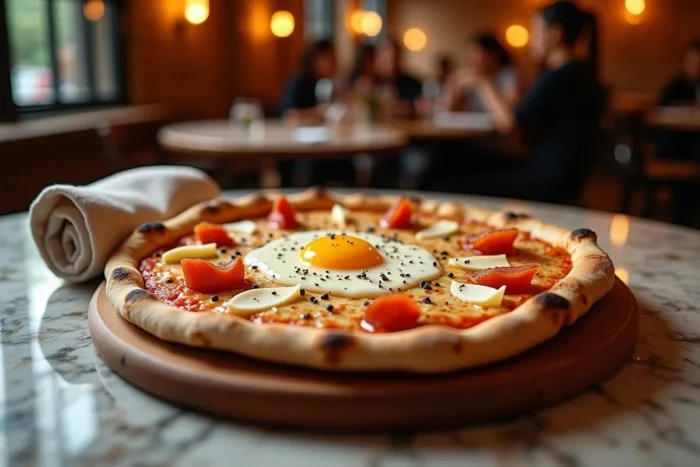
The carbonara pizza transposes the codes of a Roman pasta dish onto a pizza crust: guanciale, pecorino, egg yolk, and black pepper. At Del Arte, this recipe is regularly featured on the menu, with a creamy base and a runny egg as a topping. The result intentionally diverges from the orthodox Roman carbonara to offer an interpretation suited to the pizza format.
Roman carbonara and carbonara pizza: two distinct cooking logics
The traditional carbonara relies on a cold emulsion. The mixture of egg yolk and pecorino romano forms a creamy sauce with the residual heat of the pasta, without ever going into the oven. Transposing this logic onto a pizza presents a direct technical problem: the pizza oven reaches temperatures far higher than those needed for a delicate emulsion.
At these heat levels, the egg yolk coagulates quickly. The cooking window to achieve a still-runny egg on a well-cooked crust is very narrow. Specialized pizza-making content explains that just a few degrees difference in the oven can produce a noticeably different result, between a creamy yolk and a dry one.
This is why Del Arte’s carbonara pizza uses a creamy base rather than a simple egg-and-cheese emulsion. This adaptation ensures a consistently smooth texture, even if the egg cooks slightly more than expected. The compromise is accepted: the goal is not to replicate the Roman recipe but to capture its aromatic profile on a different medium.
Composition of Del Arte’s carbonara pizza: what sets it apart on the menu
The Del Arte menu offers classic pizzas (margherita, four cheeses) and more elaborate recipes. The carbonara falls into this second category, regularly highlighted as the pizza of the month in the brand’s communications.
Its composition revolves around several elements that work together:
- The creamy base replaces the tomato sauce. It provides the necessary binding and recalls the texture of carbonara in pasta form, while withstanding the oven without breaking down.
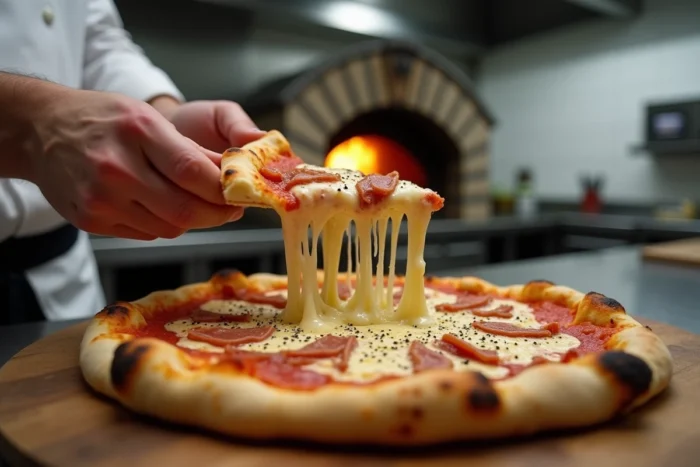
- The melted cheese (fior di latte or mozzarella) covers the base and forms a stretchy layer that retains the moisture of the topping during cooking.
- The grilled lardons or pancetta add a smoky and salty flavor. The brand adapts based on supplies, but the principle remains the same: rich and aromatic pork.
- The egg, cracked onto the pizza at the end of cooking or just before baking, is the visual signature of the dish. A runny yolk transforms each slice into an experience, as the yolk mixes with the cream and cheese when cutting the pizza.
- Generously dosed black pepper rounds out the flavor profile, echoing the classic carbonara.
What differentiates this pizza from a simple “white pizza with lardons” is the coherence among the ingredients. No element is there by chance: each corresponds to a component of the Roman recipe, transposed to work on pizza dough.
Carbonara pizza and French adaptation: a debate that goes beyond Del Arte
The question of authenticity comes up whenever a French brand offers a recipe inspired by Italian cuisine. Carbonara particularly crystallizes this debate. In Italy, content creators and professionals regularly remind of the strict rules of the canonical recipe: guanciale (not pancetta, not lardons), pecorino romano (not parmesan), no cream.
The carbonara pizza does not exist in the Roman tradition. It is a recent invention, driven by pizza makers looking to refresh their menus with familiar flavors. In both France and Italy, it increasingly appears as a seasonal or event-based offering.
Del Arte fits into this trend without claiming orthodoxy. The brand advocates for Italian cuisine adapted to French tastes, with portion sizes tailored for sit-down dining and quick service. The creamy base, often criticized by purists, responds to a technical constraint as well as a French public preference for enveloping textures.

Tasting the carbonara pizza: temperature and timing make the difference
A carbonara pizza should be eaten within the first few minutes after it comes out of the oven. The egg continues to cook from thermal inertia on the hot crust. Waiting too long means losing the runny yolk that is the dish’s main appeal.
What changes between dining in and delivery
In the dining room, the pizza arrives at the table shortly after leaving the oven. The egg yolk is still fluid, the cream slightly bubbling. This is the optimal moment. For delivery or takeout, the journey is enough to set the yolk and soften the crust due to condensation in the box.
Del Arte offers its pizzas for dining in, takeout, and delivery. For the carbonara specifically, the result in the dining room remains significantly superior. The difference is not in the quality of the ingredients but in the simple physics of heat transfer.
Coherent accompaniments
The richness of the carbonara pizza (cream, egg, cheese, fatty pork) calls for a counterpoint. A simple green salad dressed with lemon balances the meal well. For drinks, a dry white wine or a light blonde beer cleanses the palate between bites without weighing down the overall experience.
The Del Arte menu allows for a complete meal centered around this pizza, with antipasti as a starter and a dessert like tiramisu or panna cotta to stay within the Italian theme. It’s best to avoid a creamy starter that would double the heaviness with the creamy base of the pizza.
The carbonara pizza remains a unique recipe on the Del Arte menu, straddling the line between a signature dish and a seasonal offering. Its success depends as much on culinary expertise as on the timing of tasting. Order it in the dining room, cut the first slice quickly, and let the yolk do the rest.