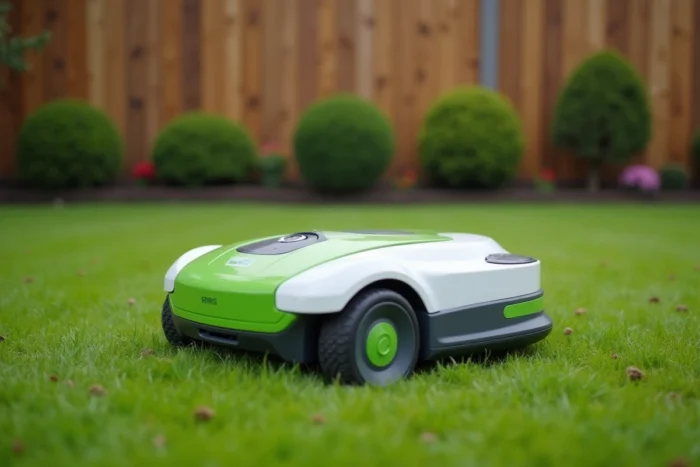
A 200 m² plot with a slight slope, a poorly trimmed hedge encroaching on the lawn, and the reluctance to take out the gas mower every Sunday: this is the typical profile of the buyer who stumbles upon the Parkside PAMRC 250 A1 City robotic mower at Lidl. Priced under 200 euros thanks to a discount coupon, this model is making headlines for its price. The question remains what you actually get for this price.
Brushless motor and Parkside X 20 V battery: what the technical sheet hides
Most articles focus on the low price. They overlook two elements that are more indicative of this robot’s positioning.
The first is the brushless motor. On an entry-level robot, this is far from guaranteed. A brushless motor reduces mechanical wear and consumes less energy per mowing cycle. In practical terms, this means increased longevity of the machine and more autonomy per charge.
The second point concerns the battery compatible with the Parkside X 20 V ecosystem. If you already own a Parkside drill, blower, or hedge trimmer, the battery is interchangeable. This changes the game compared to a robot sold with a proprietary battery that cannot be used elsewhere. We published a review of the Lidl Parkside robotic mower that details this interoperability point, often underestimated at the time of purchase.
The device targets a maximum area of 250 m². Beyond that, the cycle time increases, the passes overlap, and the result becomes uneven. For an urban garden or a small housing estate, it’s well-suited. For a 400 m² plot, it’s better to look elsewhere.
Boundary wire navigation: installation constraint of the Parkside
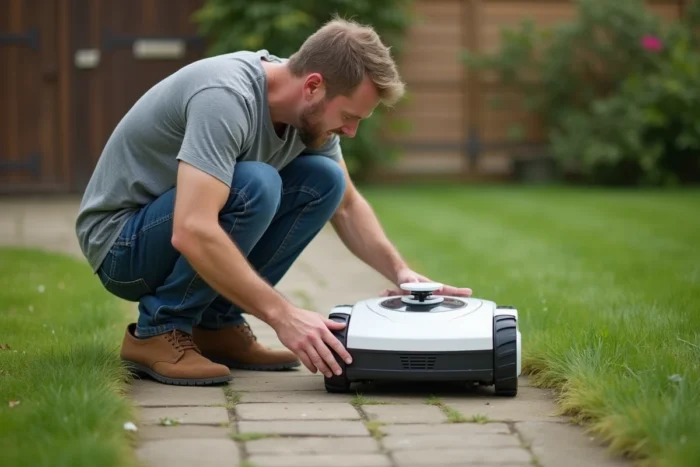
The Parkside operates with a buried or ground-fixed guide wire. This is the most common technology for low-cost robots, but it requires an initial installation that can take several hours depending on the terrain configuration.
You lay the wire along borders, around flower beds, trees, and any fixed obstacles. You need to plan for stakes, a coherent layout, and above all, patience. Feedback varies on this point: some users complete the installation in an hour on a simple square of lawn, while others struggle for half a day on an L-shaped plot with flower beds.
- The wire must be taut and well-fixed to the ground to prevent the robot from cutting it while passing
- Each obstacle (tree, concrete border, trampoline leg) requires a bypass loop in the layout
- Sloped areas must be tested manually before leaving the robot to operate autonomously
In comparison, robots without boundary wire (camera or LiDAR sensor navigation) generally cost three to five times more. The guide wire remains the logical compromise at this price level.
Real price of the Lidl robotic mower: what the displayed price covers (and does not cover)
According to Frandroid, the price dropping below 200 euros (198.47 euros precisely) depends on a 10% discount coupon and includes a delivery fee of 4.99 euros. Without the coupon, it goes back above the psychological threshold.
This detail is significant. Lidl’s promotions on Parkside tools are regular but fleeting. The price displayed in-store or on the website can vary from week to week. If you’re aiming for this price, you need to monitor the weekly catalogs and check the availability of the coupon at the time of ordering.
What’s included in the box
The robot comes with its charging base, the boundary wire, fixing stakes, and the X 20 V battery. The charger is also included. You don’t need to buy a separate installation kit, which is not always the case with competitors in this price range.
Hidden costs to anticipate
The blades wear out and need to be replaced regularly. On a robotic mower with rotating blades of this type, expect to replace the blades every two to three months of intensive use. The price of Parkside consumables remains moderate, but it should be factored into the annual budget.
If the boundary wire is cut (by a spade, or an animal passing through), the repair is simple but requires a connection kit. Nothing ruinous, but it’s the kind of detail you discover after the first automatic mowing.
Bluetooth management and rain sensor: gadget or useful function
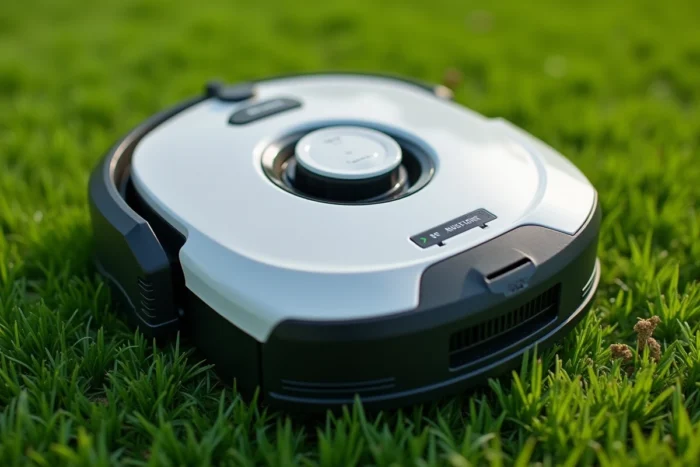
The Parkside offers Bluetooth app management to schedule mowing time slots. The Bluetooth range remains limited (about ten meters under normal conditions), which means you need to be close to the robot to change the settings.
No Wi-Fi, no remote control from the office. For a 250 m² garden, this is rarely an issue: you set the schedule once and let it run. Users who want to control their robot from their couch at the other end of the house will need to upgrade.
The rain sensor, on the other hand, sends the robot back to its base when it detects moisture. Mowing on wet grass clogs the blades and leaves uneven clumps. This function prevents unnecessary passes and preserves cutting quality.
- Scheduled programming helps avoid intense heat slots or times when people are present in the garden
- The rain sensor operates autonomously, without intervention via the app
- The noise level remains low compared to a gas mower, allowing for evening mowing without disturbing the neighbors
For a compact garden with regular use, the Lidl Parkside fulfills its contract at a price that no direct competitor offers. The brushless motor and compatibility with the X 20 V battery give it a tangible advantage in durability. The main limitation remains the 250 m² area and the lack of Wi-Fi connectivity. If your plot matches this size, it’s the most aggressive quality-price ratio on the market in 2026 in the robotic mower segment.