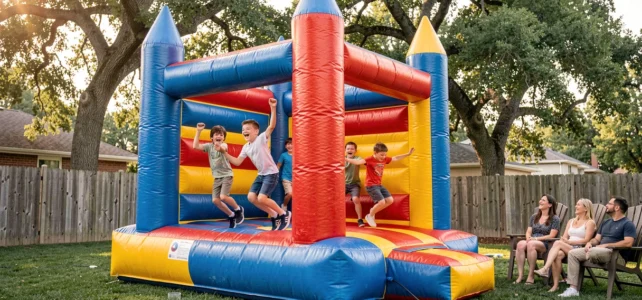
Renting an inflatable structure for a birthday party, a fair, or a corporate event requires comparing parameters that online catalogs do not always highlight: ground area, age group, anchoring constraints, and supervision obligations. This article lays out the technical and regulatory data that determine the success of renting an inflatable structure.
Comparison of Types of Inflatable Structures by Use
The choice is not limited to a question of theme or color. Each category of structure corresponds to a specific event profile, with distinct requirements regarding space, audience, and logistics.
| Type of Structure | Target Audience | Indicative Minimum Area | Preferred Context |
|---|---|---|---|
| Classic Inflatable Castle | Children aged 3 to 10 | Medium (garden area) | Birthday, private party |
| Inflatable Slide | Children aged 5 to 12 | Large (height and landing area) | School fair, village festival |
| Obstacle Course | Children and teenagers | Very large (linear) | Sports event, corporate entertainment |
| Water Structure | Children and adults | Large, with water source | Summer event, outdoor recreation |
An inflatable castle is suitable for a modest-sized garden for about ten children. An obstacle course, on the other hand, requires a much larger clear area and enhanced supervision logistics. For everything you need to know about renting an inflatable structure with Diboo, it is useful to compare these categories with the actual configuration of your venue before confirming a quote.
Regulatory Compliance and Monitoring Log: What the Provider Must Provide
The European standard NF EN 14960 governs the design and use of inflatable structures for professional use. A serious provider must be able to present a certificate of conformity or a monitoring log for each structure rented out.
This log details the history of inspections, repairs made, and the date of the last audit. Its absence is a warning sign. Compliance is not just a sticker on the structure: it involves the responsibility of both the event organizer and the rental company.
Closed Installations and Urban Planning Constraints
A point rarely addressed in rental guides concerns inflatable structures installed in closed or semi-permanent spaces. Depending on the configurations, a prior declaration, or even a building permit, may be required if the installation is considered temporary construction. Checking this point with the town hall avoids unpleasant surprises on the day of the event.
Anchoring and Electrical Supply: The Two Risk Factors on Site
Wind remains the primary factor for accidents involving inflatable structures. Insufficient anchoring combined with a gust can move, lift, or overturn an installation in seconds.
- The anchoring must be suitable for the ground: metal stakes on grass, weights or sandbags on hard surfaces (asphalt, slab). A reliable provider specifies the anchoring method in their rental terms.
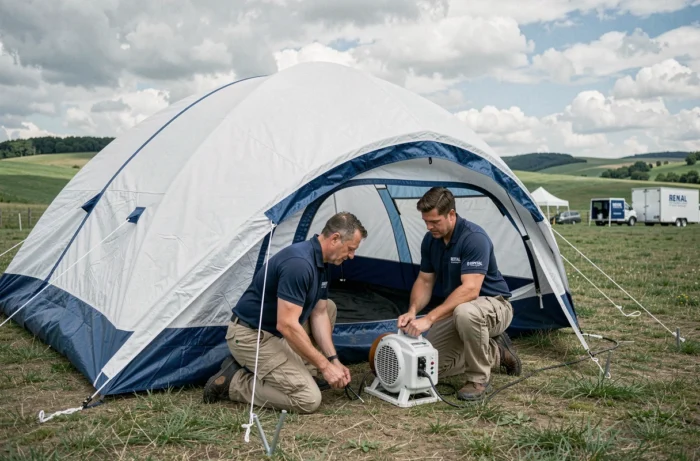
- The fan that maintains the structure’s pressure must operate continuously for the entire duration of use. A brief power cut can cause rapid deflation.
- The electrical supply must be in immediate proximity. Planning for an excessively long extension cord or a precarious connection increases the risk of accidental disconnection.
Before signing a rental contract, ask the provider if they supply the anchoring equipment and the fan, or if these elements are your responsibility. The answer changes the actual rental budget.

Active Supervision of Inflatable Games: Obligation, Not Option
Installing a structure is not enough. Active and permanent supervision during use is an obligation, not just a recommendation. A designated adult must remain in immediate proximity to the structure, monitor the number of children present simultaneously, and ensure that age and size rules are followed.
Mixing very different age groups in the same inflatable increases the risks of collision and falls. Structures designed for 3-6 year-olds are not built to withstand the energy of teenagers.
Safety Checklist Before Opening to the Public
Some checks to perform in the minutes leading up to access:
- Absence of sharp objects or debris on and around the structure
- Anchoring verified point by point (each strap, each stake)
- Fan running, stable connection, and protected against accidental disconnection
- Visible display of usage instructions (age, maximum number of users)
This verification takes a few minutes and significantly reduces the risk of incidents, especially during public events such as fairs or village festivals.
Inflatable Rental Budget: Often Underestimated Costs
The price displayed by a rental company rarely covers the full actual cost. Several items are added to the base price and deserve comparison among providers.
Delivery and pickup of the structure represent a variable cost depending on the distance. Some rental companies include it within a defined radius, while others charge per kilometer. Insurance constitutes another major difference between quotes: check if liability covers users or if you need to take out additional coverage.
Setup and takedown, sometimes handled by the provider and sometimes left to the organizer, also change the logistical burden. A provider that delivers, installs, supervises, and dismantles offers a more comprehensive service, but at a corresponding price.
Comparing quotes line by line, including delivery, insurance, and setup, gives a much more reliable picture of the total cost than a simple catalog price. It is on these additional items that the discrepancies between rental companies are most pronounced.