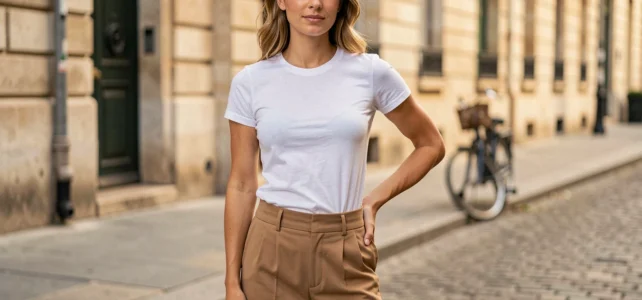
A white cotton t-shirt, worn alone with raw jeans, creates a radically different effect depending on its thickness, cut, and how it falls on the bust. The t-shirt is the most purchased item in the world, occupying the most space in our wardrobes.
Understanding what distinguishes a t-shirt that looks “sloppy” from one that structures an outfit comes down to mastering three variables: the fabric, the cut, and the visual contrast it creates with the rest of the look.
T-shirt fabric: the invisible lever that changes the perception of an outfit
Most fashion advice focuses on color or print. The fabric plays a more decisive role in the overall appearance. A fine, smooth jersey gives a casual look, sometimes too soft on the shoulders. A fabric with body, a sufficiently dense weight, maintains the shape of the garment and creates a sharper silhouette effortlessly.
For a few seasons now, textured t-shirts have replaced prints to sophisticate a look. Waffle knits, ribbed fabrics, or pique cotton add visual relief to a solid piece. The eye catches the surface of the fabric instead of sliding over it. This simple change in texture is enough to transform a basic into a fashion piece, without resorting to a logo or graphic pattern.
As detailed by the fashion blog 2moiselles Happy Lookeuses, choosing the right t-shirt profoundly alters the balance of a simple outfit. A pique cotton worn with tailored pants creates a casual-chic contrast that basic jersey does not produce.
In practice, three textures are worth testing:
- The waffle cotton, whose honeycomb relief captures light and adds volume without thickening the silhouette.
- Ribbed cotton, whose fine vertical ribs visually elongate the bust and structure the shoulders.
- Pique (like a collarless polo), which provides a more polished finish while remaining breathable.
Cut and morphology: a t-shirt that is too big does not look “oversized,” it looks poorly fitted
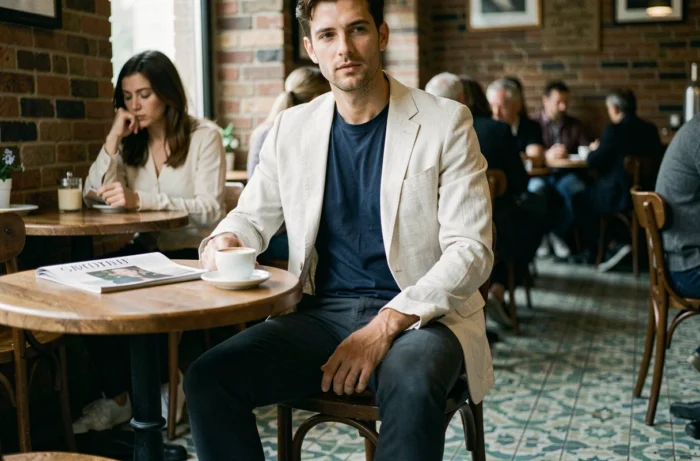
The cut of a t-shirt directly interacts with morphology. An “oversized” model is designed to fall in a certain way: slightly dropped shoulders, calibrated length, wide but proportionate armholes. Buying two sizes up does not reproduce this effect. The shoulder seam drops too low, the fabric gapes at the neck, and the overall look weighs down the silhouette instead of styling it.
Each t-shirt cut alters the perceived proportions of the body. A fitted model visually shortens the bust, which suits elongated silhouettes. A straight model, neither tight nor loose, fits most body types because it follows the body’s line without molding it. The crop top, worn with high-waisted pants, creates a defined waistline that restructures the silhouette.
The neckline also plays an underestimated role. A classic round neck suits angular faces. A V-neck elongates the neck and opens up the bust, balancing broad shoulders. The boat neck visually widens the shoulder line, useful for A-shaped bodies.
The common mistake: ignoring length
A t-shirt that is too long worn tucked into pants creates a bunch of fabric at the waist. Too short without being a crop, it rides up with the slightest movement. The right length is at the hip junction: long enough to be tucked in neatly, short enough to be worn over without hiding the belt.
Message t-shirt: when style becomes visual identity
The message t-shirt has traversed decades without ever disappearing, but its role in the look has evolved. In 2026, the return of the white t-shirt with inscriptions is part of a broader trend that mixes 70s punk references, 2000s logos, and 2010s indie sleaze aesthetics.
The message t-shirt transforms the visual identity of a look even before considering the cut or accessories. A political slogan, a cultural reference, or a vintage logo changes how the person is perceived. The message directs the gaze, creates a connection, or provokes a reaction. It is no longer a passive garment; it is a surface of expression.
The stylistic challenge is to balance the message with the rest of the outfit. A strong message t-shirt works best with understated pieces: raw jeans, chinos, white sneakers. Multiplying prints or bright colors around a slogan dilutes the impact. The t-shirt must remain the focal point.

Style contrast: wearing a t-shirt with pieces that create tension
A t-shirt worn with joggers and sneakers gives a coherent sportswear look, but without surprise. The transformative potential of the t-shirt reveals itself when it rubs against pieces from another register. It is this contrast of style between casual and dressed that generates elegance.
A plain white t-shirt tucked into pleated tailored pants, with a leather belt and loafers, creates a more interesting look than a shirt in the same configuration. The t-shirt brings relaxation, the pants provide structure, and the tension between the two creates a modern outfit.
The same logic applies to other combinations:
- Plain t-shirt + pleated midi skirt + flat sandals: the feminine-casual mix creates a touch of effortless elegance.
- Textured t-shirt + oversized blazer + straight jeans: the trio produces a structured urban look without rigidity.
- Message t-shirt + wide linen pants + espadrilles: the contrast between the tone of the message and the fluidity of the bottom generates a bold style.
In each case, the t-shirt only enhances the outfit if there is a deliberate mismatch between its casual register and at least one other more dressed piece. Without this contrast, the outfit remains flat.
The role of accessories in the equation
A structured necklace on a plain round-neck t-shirt transforms the neckline into an area of interest. A large dial watch on a short-sleeved t-shirt draws the eye to the wrist. Accessories do not compensate for a bad t-shirt, but they amplify the effect of a good textile choice.
The t-shirt remains the simplest piece in a wardrobe, and it is precisely this simplicity that gives it so much potential. The fabric defines perceived quality, the cut adjusts proportions, and the contrast with the rest of the look creates style. Three parameters, not fifty. The rest is a matter of coherence between what the garment says and what the outfit tells.